Why a Sequel to Call Me By Your Name Could Be Devastating
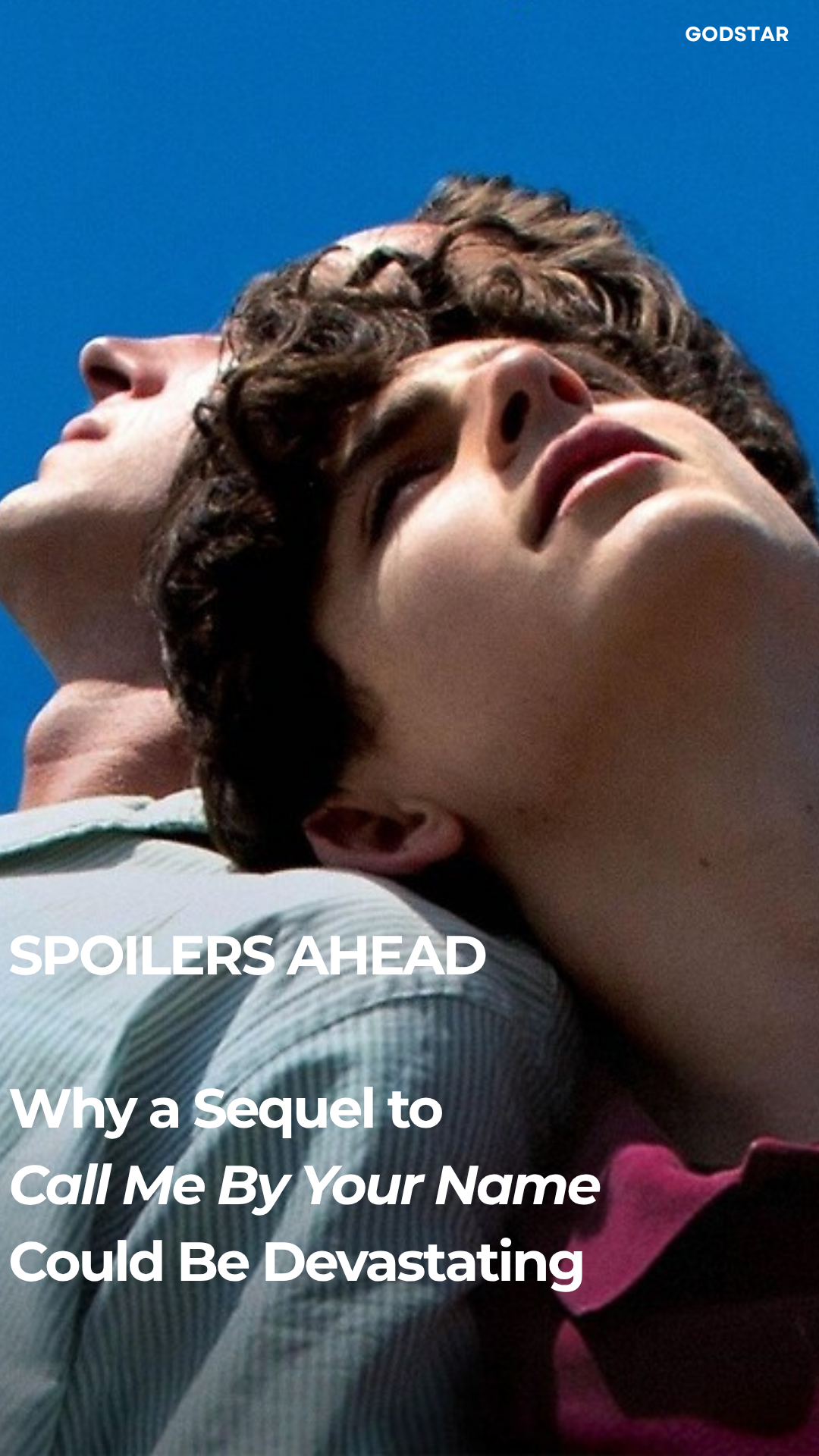
In the early stages of scripting Call Me by Your Name, an early draft reportedly included dialogue referencing a “new disease” affecting the LGBTQ+ community. André Aciman, the author of the novel, later shared in an interview with British Vogue that he asked for the scene to be removed, feeling it was aesthetically out of place and that he did not want the parents or the audience confronted with that reality so explicitly.
Although the novel is set in 1987, during the height of that public health crisis, the 2017 film adaptation shifts the timeline to 1983, before it had entered widespread public consciousness. Still, the film offers subtle moments that some viewers interpret as quiet signals of the era’s looming uncertainty, including a brief nosebleed that has been read as a restrained, symbolic hint of how easily the story’s tone could darken.
More explicitly, director Luca Guadagnino has spoken about a potential sequel that would engage more directly with this historical context. In an interview with NME, he described a vision in which the story might continue with Elio watching a 1988 film about a man living with the illness, positioning it as a meaningful backdrop in the characters’ later lives.
Taken together, this sense of time, mortality, and emotional aftermath contributes to the story’s tragic weight. It is this quiet inevitability, rather than overt dramatization, that gives the narrative its enduring sense of poignancy.
Project Goal
To explore how author and filmmaker choices in a potential sequel could heighten emotional stakes by confronting historical reality, revealing the power of narrative restraint and consequence.
Platforms
TikTok, Instagram Reels, and YouTube Shorts
Year
01/26/2026
#callmebyyourname #timotheechalamet #booktok #elioandoliver #romance
#callmebyyourname #timotheechalamet #booktok #elioandoliver #romance
The Filmmakers May Have Hinted at Something Darker
The truth is, we don’t think our hearts could take it. After Luca Guadagnino’s 2017 film adaptation of André Aciman’s beloved novel, starring Timothée Chalamet and Armie Hammer, we were left with a cinematic masterpiece that captures a fleeting, transformative love between Elio and Oliver. The film is steeped in warmth, longing, and intimacy, only to end in separation, a quiet but devastating reminder that reality exists. Sometimes people cannot accept it. Sometimes they cannot let go of who society tells them they must be.
That ending is precisely why the film feels so honest. It does not offer comfort through permanence. It offers truth. Love, especially forbidden or unspoken love, does not always survive the world it exists in.
When it comes to Call Me by Your Name, filmmakers may have hinted at something darker beneath the surface, an undercurrent that reframes the story as something closer to a tragedy. Brief, easily missed moments in the film, including a nosebleed and an infected wound, have been cited by some viewers as quiet signals, while others interpret them as non-threatening occurrences. While neither the novel nor the film explicitly names the AIDS crisis, the story unfolds during its height, and that historical reality inevitably shadows the intimacy, risk, and uncertainty at the heart of Elio and Oliver’s relationship for some fans.
Director Luca Guadagnino has spoken publicly about his intention for a potential sequel to acknowledge the AIDS crisis more directly. He has described a vision in which a continuation of the story could begin with Elio watching a 1988 film about a man living with AIDS, positioning HIV and AIDS as a significant backdrop in the later chapters of the characters’ lives (Guadagnino, quoted in NME).
The continuation of the story in Aciman’s follow-up novel, Find Me, shifts the focus inward. Readers often describe the book as a meditation on time, aging, and romantic longing, one that expands beyond Elio and Oliver to explore parenthood, chance encounters, and the belief that love can arrive, or return, later in life. Rather than resolving the past, Find Me lingers on memory, regret, and the pull of destiny, suggesting that love is less about certainty than timing, and that the desire for connection persists even as life moves forward.
We admire the filmmakers’ willingness to engage more openly with this historical and emotional reality. Still, as viewers and fans, the idea of those quiet details becoming explicit feels almost unbearable. There is something devastating in imagining a world where a nosebleed or a bruise carries irreversible meaning.
Perhaps that is why we hope the story remains where it is. Call Me by Your Name leaves us with memory instead of resolution, with feeling instead of fate. In doing so, both the book and the film achieve something rare and powerful. They make us care so deeply for their characters that we fear what knowing more might cost them, and us.